One thing is notably missing from my life in Chicago – fresh mochi. I’m fortunate to have a Mitsuwa super-store within easy reach, which means plenty of Japanese grocery stapes, gadgets and tableware, and fresh baked goods.
And there are whole refrigerated cases of mochi at Mitsuwa, mostly daifuku – small, sweet mochi confections that are sometimes white but just as often daintily colored pink or green. But no fresh mochi.
They’re bigger than daifuku, and simpler – just pounded white rice surrounding an anko bean center, and very perishable.
One reliable source of fresh mochi is Suruki, the Japanese market in San Mateo. Pick up a package and press it ever so gently, and you’ll feel the mochi give way – it’s perfectly fresh. I like my mochi for breakfast, so I leave the package out on the counter overnight; in the morning, the mochi have already hardened a bit. If you need to keep them for longer than a day (or, say, transport them to Chicago), they must go into the refrigerator or the freezer – it will preserve them, but they’ll be hard, even when thawed.
All of which means: truly fresh mochi is a rare treat for me.

The best way to make mochi is to cook it very slowly in butter, in a small, covered pan. Check on it often – as my grandfather said, mochi is the perfect food when you’re hungry, since you can poke it as much as you’d like while waiting. The pounded rice becomes warm and sticky beneath a crisp, savory exterior; the anko beans provide soft, sweet contrast.
It takes a long time to eat this kind of mochi, so it’s ideal for a leisurely breakfast with lots of contemplative chewing. And afterwards, I have energy to get through the whole morning, without the slightest hungry stomach rumble.
 My sister’s visit!
 Shakshuka (baked eggs)
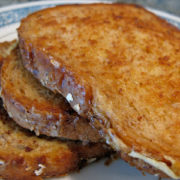 Ojiichan’s French toast
 Egg in the hole